


Am I Traumatized Enough? Mental Health Day
"Other people have been through so much worse. Their stories are more serious, more urgent. What I experienced does not really compare."
A woman who volunteered in a civilian emergency response center during the war said this to us. She was not on the front lines. She was "just" sitting behind a screen: monitoring feeds, coordinating logistics, and managing emergency escalation in real time.

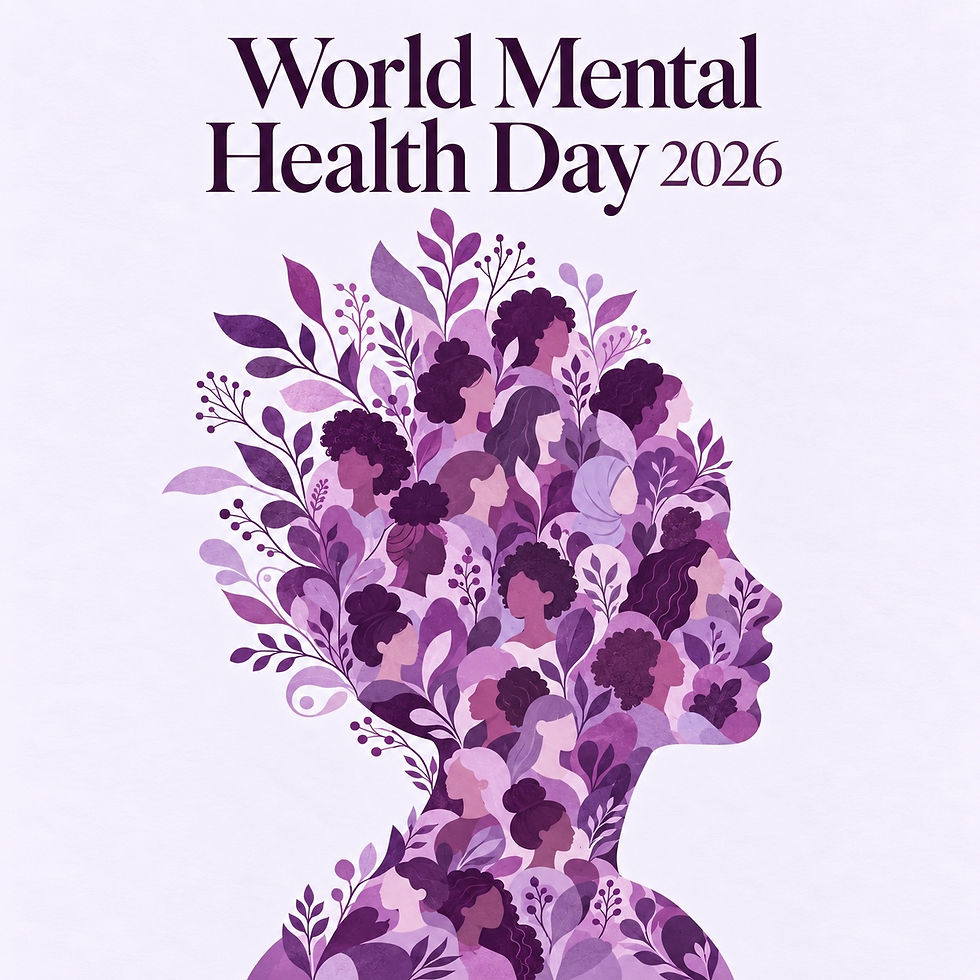
October 10 is World Mental Health Day.
In communities navigating acute crisis and conflict, discussing mental health without addressing trauma is impossible.
Typically, organizations view denial as the primary barrier to psychological safety: employees masking symptoms out of fear of appearing weak. But our conversation revealed a quieter, equally destructive pattern.
She was not denying her reality. She was receiving professional support and spoke candidly about her diagnosis. The barrier was not acknowledging her trauma.
It was believed her trauma was not severe enough "to qualify".
Can You Be "Less Traumatized" Than Someone Else?
Even while managing diagnosed PTSD, she felt compelled to apologize. Because she was not physically in the line of fire, she assumed she had not earned the right to request workplace flexibility, accommodations, or basic empathy.
Trauma is not a competitive sport. There is no legitimate ranking system for suffering.
While clinical PTSD requires specific diagnostic criteria, profound distress does not require physical proximity to danger. Secondary trauma, prolonged crisis exposure, and remote emergency coordination take a heavy neurological toll.
Yet corporate cultures routinely rank suffering, and this plays out on two fronts: individuals judge their own distress as illegitimate, and organizations design policies that demand proof before offering care.
The Problem With Organizational "Eligibility"
When organizations address mental health, the default reflex is bureaucratic:
Where were you located?
Were you on active duty?
How long was your exposure?
Does your situation fit predefined policy criteria?
Leadership teams ask: "How many employees actually qualify for accommodations?"
This approach misses the point entirely.
When support depends on proving you suffered "enough," employees with invisible struggle simply opt out. They internalize guilt, mask their exhaustion, and quietly disengage while leadership celebrates resilience.
Rather than forcing people to prove their pain, organizations must design operational flexibility into their everyday systems. This means adaptable workloads, psychological safety, and managers trained to respond with support rather than administrative skepticism.
Support cannot be reserved for neatly packaged categories. Employees need to know they can speak up without a formal diagnosis, and without having to justify why their distress matters.
Trauma Does Not Follow An Organizational Calendar
Organizations also misunderstand the timeline of psychological distress. The impact of trauma rarely follows a tidy schedule.
During an active crisis, survival mode keeps functional capacity high and difficult emotions suppressed. When the immediate operational pressure subsides, delayed trauma surfaces. This is equally true for military personnel, frontline volunteers, and emergency coordinators operating under prolonged pressure.
Employees sitting across from you right now may be carrying heavy psychological loads without showing outward distress. Months or years later, an unrelated operational stressor, a news alert, or an unexpected trigger can reactivate acute symptoms.
Leaders must eliminate the damaging question: "Why are you only bringing this up now?"
Timing does not determine validity. Workplaces must prepare for an environment where employees need mental health flexibility at unpredictable moments, regardless of when the initial event occurred.
Dismantling The Hierarchy Of Suffering
How should organizations answer the question: "Am I traumatized enough?"
By eliminating the question entirely.
No employee should have to earn the right to struggle. Dignity, flexibility, and workplace support should never depend on proximity to a physical front line or arbitrary eligibility checklists.
This World Mental Health Day, organizations need to stop optimizing criteria and start designing for people. A workplace that stops ranking suffering is a workplace where people feel safe enough to speak up early, and that is where sustainable performance begins.
If you have questions or would like to discuss how to successfully recruit and employ People with disAbilities and Mental Health challenges in your organization, we are here to help. Feel free to contact us at info@TheDEICode.com.


Comments